Water Bottles vs. Bowls for Rabbits: Which Is Better?
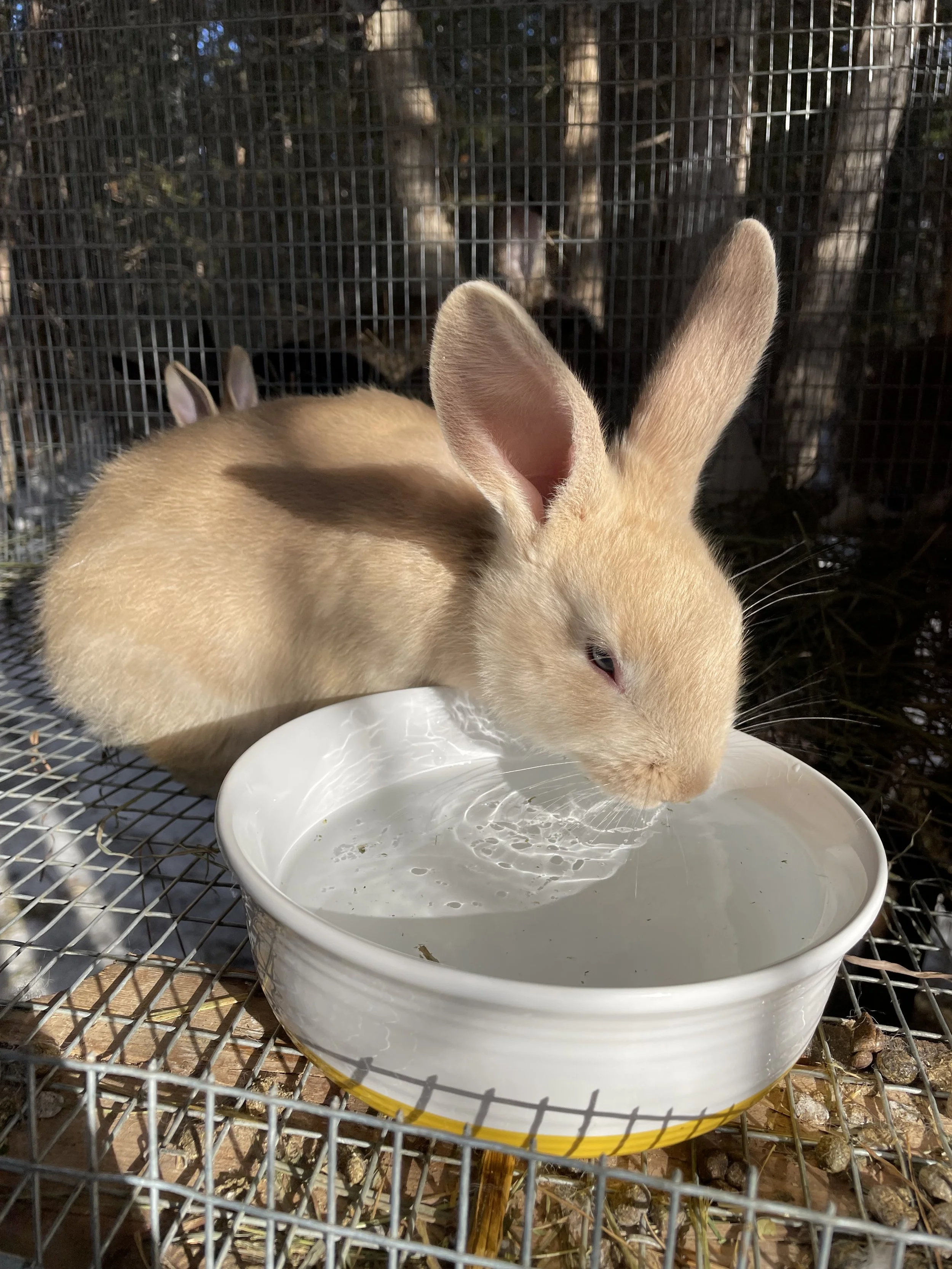
A small orange rabbit drinks from a bowl of clear water.
Water is one of the simplest parts of rabbit care, but the way we provide it can make a meaningful difference. Two of the most common options are water bottles and open bowls or crocks, and both have advantages.
At Field’s End Farm, we look at equipment through a practical husbandry lens: Can the rabbit use it easily? Is it reliable? Does it stay reasonably clean? And does it still work when conditions change?
There isn't one perfect watering system for every rabbitry. Understanding the strengths and weaknesses of bottles and bowls makes it easier to choose the right system — or combination of systems — for your own setup.
Ease of Drinking
This is one of the strongest arguments in favour of bowls.
A rabbit drinking from a bowl can lower its head and lap water freely, with no valve restricting flow. This can be especially helpful for lactating does and rabbits in hot weather.
Bottles require the rabbit to operate a small valve with its tongue. Rabbits can learn this easily, but the water is delivered more slowly and requires more effort.
Reliability and Failure Points
A bowl is mechanically simple: if there is water and the rabbit can reach it, it is available.
A bottle has more potential failure points. The valve can stick or clog, the bottle can leak or empty unnoticed, and in winter the nozzle can freeze even when the reservoir is still liquid.
Bowls also have risks. They can be tipped, and they can be contaminated with bedding, hay, or manure. Heavy crocks or mounted bowls reduce tipping, but contamination still needs monitoring.
Cleanliness
This is where bottles usually perform best.
Because water is enclosed, rabbits cannot step in it or drop material into it. A properly functioning bottle can stay clean for long periods.
Bowls are exposed to the environment and generally require more frequent cleaning. Some rabbits keep them clean; others do not.
Bottles still require maintenance. Biofilm can develop inside the bottle and especially around the nozzle, even when they appear clean externally.
Summer Use
In hot weather, we primarily use bottles. They stay cleaner, are easy to manage at scale, and a 1-litre bottle is usually sufficient for a single rabbit under normal conditions. In grow-out cages with multiple young rabbits, we provide multiple bottles to meet higher demand.
Rabbits drink more in heat, so consistent access is critical. Bottles provide a controlled supply, but must be checked regularly for emptiness or blockage.
Bowls still have value in summer. They allow faster drinking and can act as useful supplementation in high-demand cages or as a primary source in single-rabbit setups.
Winter Use
Below freezing, bottles become unreliable. In eastern Ontario, this is typically November through April. The valve and nozzle freeze quickly, and a bottle may appear full while no water is available.
Bowls freeze from the surface, but the problem is visible. Ceramic ramekins or stainless-steel bowls work well, and ice can be quickly removed with hot water. Metal bowls release ice more easily during repeated freeze–thaw cycles.
Winter watering is less about the container and more about management: rotation, frequent checks, and a reliable routine matter most.
Cost
Bottles are inexpensive upfront and save cage space, but they wear out. Valves fail, plastic degrades, and fittings are easily lost.
Bowls range from cheap plastic to durable ceramic or stainless steel. Heavier crocks cost more initially but often last longer.
Mounted stainless-steel bowls offer a middle ground: they prevent tipping while maintaining open access, though they still require proper installation and cleaning.
Daily Labour
Bottles are easy to scan visually, which makes quick checks across a rabbitry efficient.
Bowls require more hands-on work: dumping, rinsing, and refilling each one individually.
However, a full bottle is not always a functioning bottle, so periodic flow checks are still necessary.
Automatic Watering
As rabbitries grow, automatic systems become an option. These use a central reservoir connected to individual drinkers via tubing.
The main benefit is reduced daily labour. The main risk is scale: a single failure can affect many rabbits at once. Individual valves can still clog or leak, and freezing adds further complications.
Automation can be very effective, but it is not maintenance-free. It still requires inspection, cleaning, and a backup plan. The key question is not just how much labour it saves, but how quickly a failure will be noticed.
So Which Do We Prefer?
Bottles and bowls are not competing systems so much as different tools.
At Field’s End Farm, the priority is not the container itself, but consistent access to clean water.
The best system is the one that fits your housing, climate, and management routine — and one you can reliably monitor every day.
For some rabbitries, that will be bottles. For others, heavy crocks or mounted bowls will make more sense. In many cases, a combination provides useful redundancy, especially in hot weather or high-demand situations.
Equipment should support husbandry, not replace observation. Whatever system you use, check the water, watch the rabbit, and confirm the system is working.
Respect for the animal. Observation before action. Prevention before treatment. Stewardship in every practice.
