If you've ever touched a Rex rabbit, you probably remember it.
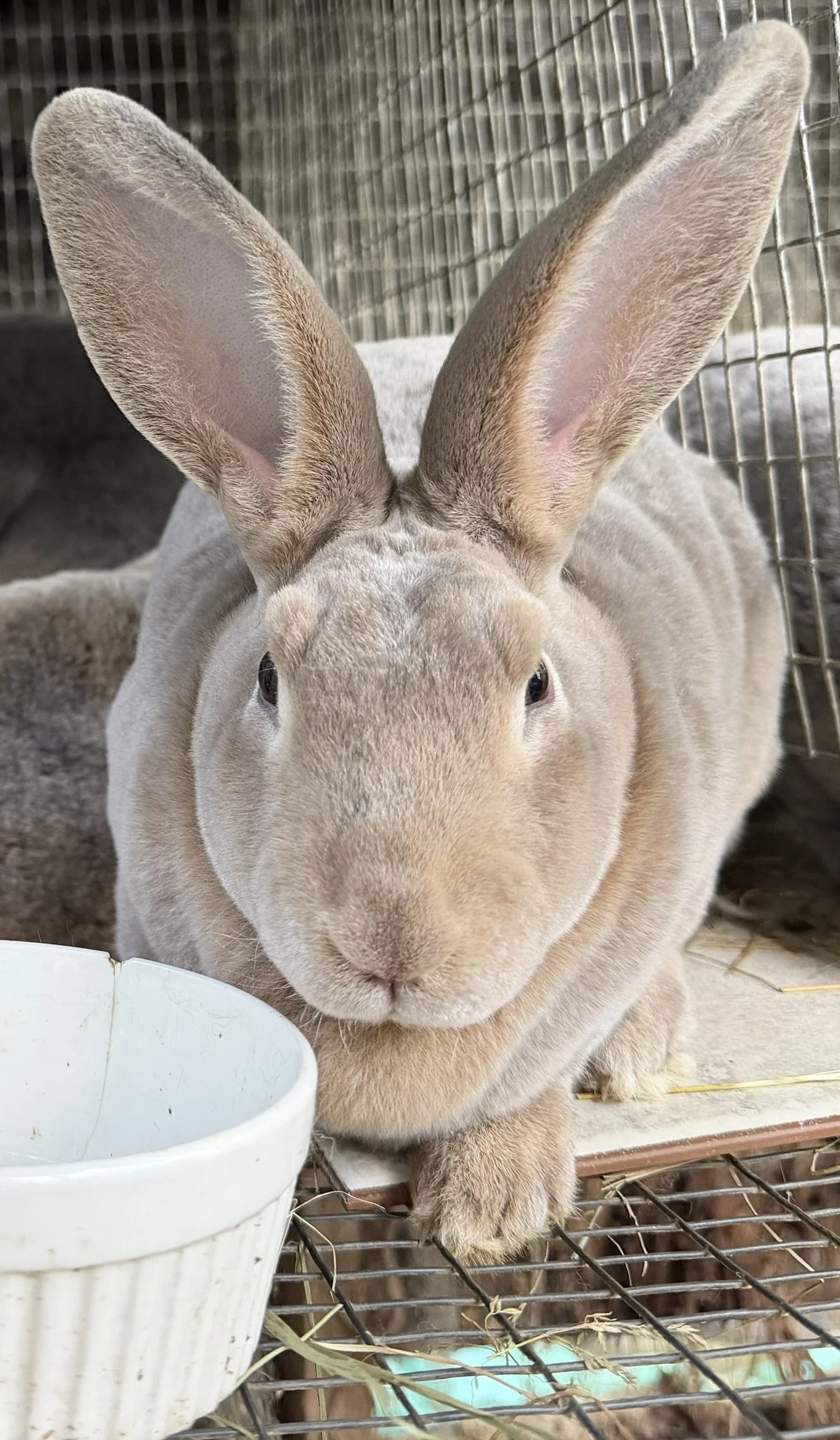
Lynx Rex rabbit from B26-004 at Field’s End Farm.
Their exceptionally soft, dense fur has a distinctive velvet-like texture unlike that of most other rabbits. It's often the first thing people notice about the breed, but there's much more to Rex than their beautiful coats.
Rex are remarkably versatile animals. Their combination of a useful commercial body type and distinctive fur makes them well suited to dual-purpose meat and fur production. They are also popular as show rabbits and companions.
It's this versatility that makes Rex such a valuable part of our breeding program at Field's End Farm.
What Makes Rex Fur Different?
The distinctive Rex coat is the result of a genetic mutation that changes how the fur grows. Unlike most rabbits, whose longer guard hairs extend beyond the soft undercoat, Rex rabbits have guard hairs that are approximately the same length as their undercoat. This creates the dense, upright, velvet-like texture for which the breed is known. [1, 2]
The Rex coat is a recessive genetic trait, meaning a rabbit must inherit a copy of the gene from each parent to develop the distinctive fur. This same trait is also associated with the characteristic curled or crinkled whiskers seen in Rex rabbits. [2]
Standard Rex or Mini Rex?
Rex rabbits come in two distinct breeds: Standard Rex and Mini Rex. Both share the characteristic velvet-like coat but differ considerably in size.
Standard Rex are medium-to-large rabbits with a commercial body type. Mature bucks typically weigh between 7½ and 9½ pounds, while does range from 8 to 10½ pounds. Their larger size makes them particularly well suited to dual-purpose meat and fur production. [1]
Mini Rex are considerably smaller, with mature rabbits weighing no more than 4½ pounds under the American Rabbit Breeders Association (ARBA) standard. Despite their smaller size, Mini Rex can also be raised for meat and fur, producing smaller carcasses and hides. They generally require less housing space and consume less feed per animal, making them an option worth considering for smaller-scale operations. They are also popular as show rabbits and companions. [3]
Both breeds offer the distinctive Rex coat and can serve a variety of purposes. The best choice depends on the intended use and the resources available to care for them.
A Rabbit of Many Colours
Rex rabbits come in a remarkable variety of colours and patterns, ranging from solid black and rich chocolate to warm reds, soft blues, and intricate agouti patterns.
The American Rabbit Breeders Association (ARBA) recognizes 16 Standard Rex varieties or variety groups: [4]
Amber, Black, Blue, Broken, Californian, Castor, Chinchilla, Chocolate, Lilac, Lynx, Opal, Otter, Red, Sable, Seal, and White.
Some varieties include several colour combinations. For example, Otter can occur in black, blue, chocolate, and lilac, while Broken refers to rabbits with patches of colour against a white background, including tricolour patterns.
Beyond the recognized show varieties, other colours and combinations can occur, particularly in crossbred rabbits. This diversity makes Rex an interesting breed for those who appreciate the beauty and variety of natural fur.
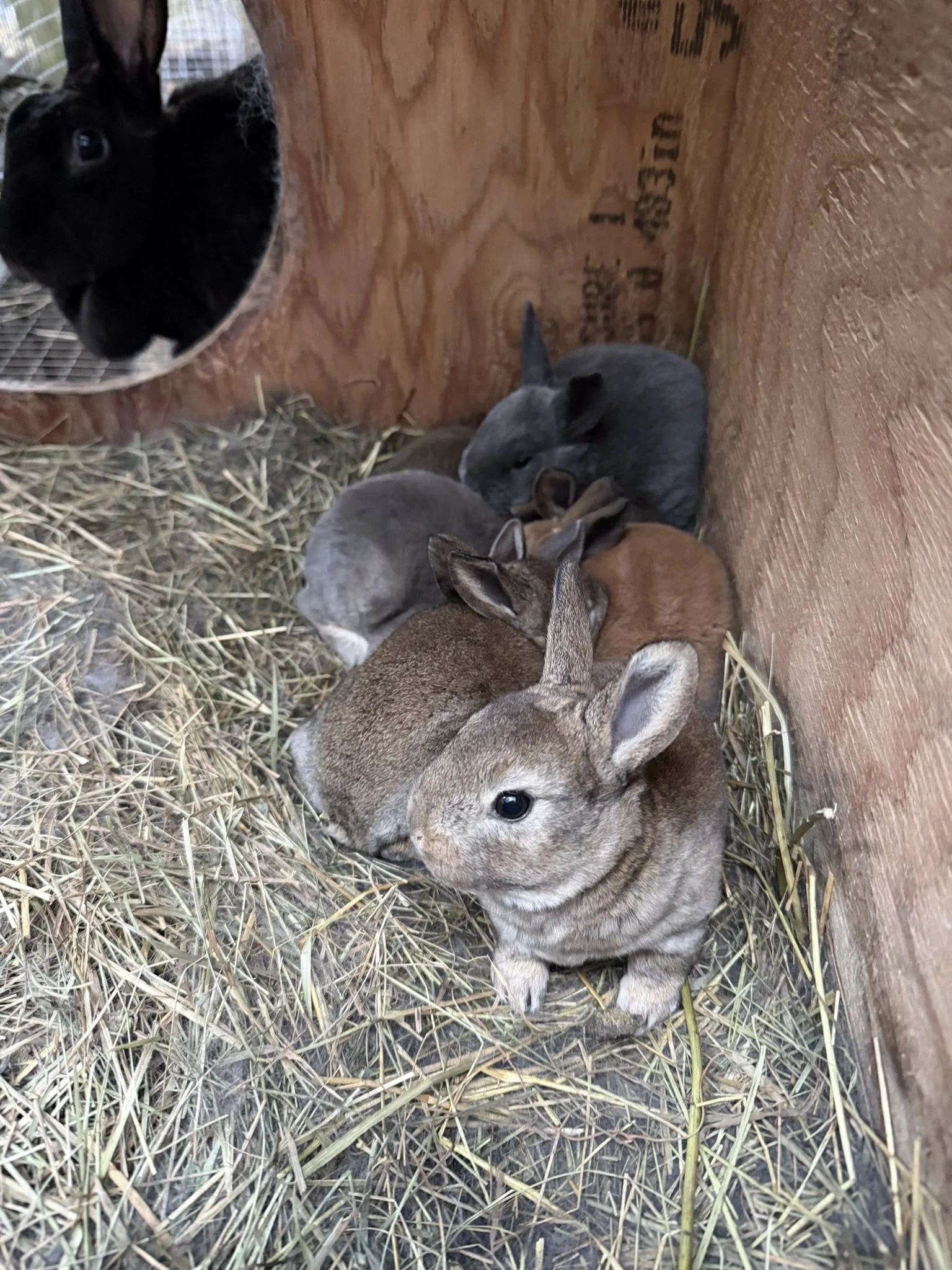
B26-007 at Field’s End Farm showing a range of colours.
Special Considerations
Like any breed, Rex rabbits have characteristics that require special consideration when it comes to husbandry and production.
Their distinctive coat provides less protective fur on the bottoms of their feet, making Rex more susceptible to sore hocks, a condition known as pododermatitis. Appropriate flooring, clean and dry housing, maintaining a healthy body weight, and selecting breeding stock with well-furred feet can help reduce this risk. [5]
Why Rex?
At Field's End Farm, Rex rabbits offer a combination of qualities that I particularly enjoy working with. They provide good meat production alongside a distinctive, specialty fur that can be tanned and transformed into beautiful, useful products. Because I tend to keep my grow-outs longer to allow their coats to develop, rapid growth isn't my primary consideration when selecting breeding stock.
Beyond their practical value, I've found Rex to have generally sweet temperaments, and their unusual coats and wide variety of colours make them stand out from more conventional rabbit breeds. The genetics behind those characteristics add another layer of complexity that I find particularly interesting.
For me, Rex offer a balance of productivity, personality, and opportunities to keep learning. That combination makes them a rewarding breed to raise and one I look forward to developing further at Field's End Farm.
Sources and Further Reading
[1] American Rabbit Breeders Association (ARBA). Rex. Breed description and standards.
https://arba.net/rex/
[2] Diribarne, M., et al. (2011). A Deletion in Exon 9 of the LIPH Gene Is Responsible for the Rex Hair Coat Phenotype in Rabbits. PLOS ONE, 6(4), e19281.
https://doi.org/10.1371/journal.pone.0019281
[3] American Rabbit Breeders Association (ARBA). Mini Rex. Breed description and standards.
https://arba.net/mini-rex/
[4] National Rex Rabbit Club. Rex Varieties. Recognized varieties and colour descriptions.
https://www.nationalrexrc.org/varieties
[5] Merck Veterinary Manual. Noninfectious Diseases of Rabbits. Veterinary reference covering pododermatitis and contributing factors.
https://www.merckvetmanual.com/exotic-and-laboratory-animals/rabbits/noninfectious-diseases-of-rabbits
